What You'll Learn in Woodwind Lessons
Every woodwind lesson at Hilton is built on the same foundations —
embouchure, breath and air support, and fingering systems — then shaped entirely by your specific instrument, your current level, and your goals. A clarinet student learning to cross the register break needs different exercises than a flute student building headjoint tone, or an oboe student managing their first double reed. Ashton and Wendy plan each lesson accordingly.
Embouchure and First Tone. Getting a correct, consistent embouchure is the foundation of everything else on a woodwind instrument. For flute players, this means directing a narrow air stream across the edge of the embouchure hole at the right angle — a precision skill that takes focused practice but rewards patience. For single-reed players (clarinet and saxophone), embouchure means forming the correct lip shape around the mouthpiece so the reed vibrates freely without being choked. For double-reed players, the lips must cushion and control two vibrating cane blades simultaneously. Your teacher builds correct embouchure habits from the very first lesson, because bad habits formed early are significantly harder to undo.
Reeds and Reed Care. Four of the five woodwinds use reeds, and understanding your reed is part of playing well. Clarinet and saxophone beginners start on strength 2 to 2.5 reeds (Vandoren and Rico are the standard brands) and learn to seat, wet, and replace them. Oboe and bassoon students work with handmade double reeds that require more care and eventually — for oboists — reed-making skills. Ashton teaches reed selection and care alongside technique from day one; there is no point in drilling embouchure on a dead reed.
Breath and Air Support. Air is the engine of every woodwind instrument, and every woodwind taxes it differently. Flute consumes the most air volume because so much is lost across the embouchure hole. Oboe and bassoon trap air and require managing back-pressure rather than simply pushing air through. Clarinet and saxophone demand a steady, pressurized column that sustains the reed's vibration. Whatever your instrument, you will spend significant lesson time on diaphragm support, phrase breath, and the muscle memory that keeps your air consistent.
Fingering Systems. Flute and clarinet both use the
Boehm system keywork — the standardized key layout developed in the 19th century that places keys where fingers naturally fall. Saxophone shares similar logic in the left hand. Oboe and bassoon have their own more complex key systems, including thumb keys that are unique to bassoon and octave keys for the upper register on oboe. Ashton teaches every system methodically, starting in the most comfortable register and expanding range progressively.
Tone Development and NYSSMA Preparation. A technically correct instrument setup and embouchure produces the raw material of tone; how that tone develops over months of lessons is what separates a beginner from an intermediate player. Ashton and Wendy build tone work into every lesson — long tones, tuning with a reference pitch, listening to recordings of strong players — alongside the
NYSSMA preparation that is a core part of what Hilton does. NYSSMA levels 1 through 6, solo literature selection, sight-reading, scales — all of it is part of woodwind lessons here, not a separate add-on.
Explore the Woodwind Family
Flute
An air-reed instrument with no mouthpiece and no reed — tone is formed entirely by directing a stream of air across the embouchure hole. Wendy and Ashton teach flute from first sounds through NYSSMA solo preparation and advanced band repertoire. Explore flute lessons
Clarinet
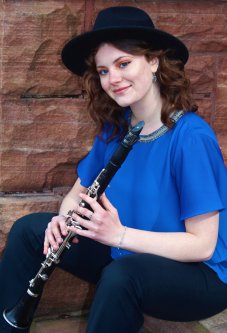
A single-reed woodwind with a distinctive register break between its lower and upper ranges — one of the defining technical milestones of the instrument. Ashton teaches the Boehm system keywork, reed selection, and all things NYSSMA. Explore clarinet lessons
Saxophone
A single-reed instrument that shares embouchure fundamentals with clarinet — which makes it a natural crossover instrument. Ashton teaches alto, tenor, and the full saxophone family for concert band, jazz, and NYSSMA. Explore saxophone lessons
Oboe
A double reed instrument with a penetrating, singing tone — and the instrument that tunes the orchestra. Ashton's Ithaca College oboe concentration makes this a genuine specialty; reed-making is part of the curriculum for advancing students. Explore oboe lessons
Bassoon
The bass voice of the woodwind section — a large double-reed instrument with more keys than any other standard woodwind. Ashton teaches hand position, bocal and reed care, and the full range from bass clef fundamentals to tenor clef for advanced players. Explore bassoon lessons